


Polycarbonate roof screws leaking or loosening? Do these 3 things first
When polycarbonate roof screws start leaking, loosening, cracking the panel, or failing to hold properly, the problem can feel urgent because water may enter the roof structure quickly. The good news is that not every screw issue means the whole roof needs to be replaced. Many problems come from incorrect screw type, over-tightening, missing washers, aged sealing washers, poor drilling, or panel movement caused by heat expansion and contraction.
Before removing large sections of roofing, start with a controlled inspection. Polycarbonate sheets are durable but sensitive to improper fastening. If screws are driven too tightly, the panel may deform or crack. If screws are too loose, wind uplift and rainwater can enter around the fixing point. The right first step is to identify whether the issue is caused by the screw, washer, hole size, support structure, or panel movement.
Do these 3 things first:
- Check the washer condition: Look for cracked, flattened, missing, or hardened sealing washers around the polycarbonate roof screws.
- Inspect the screw tension: Screws should hold the sheet securely without crushing the panel or making the washer bulge excessively.
- Look for panel cracks around the screw holes: Star-shaped cracks, enlarged holes, or warped sheets usually indicate drilling, fastening, or thermal movement problems.
If the washer is damaged but the sheet is still intact, the repair may be as simple as replacing the screw and washer with the correct roofing fastener. If the sheet is cracked, the hole is oversized, or the supporting frame is moving, the repair needs more care. The following sections explain how to classify the cause and choose the next step without making the damage worse.
Common causes of polycarbonate roof screw issues
Polycarbonate roof screw problems usually fall into several categories: fastener selection, washer failure, installation error, structural movement, and weather exposure. Because polycarbonate expands and contracts more than many rigid roofing materials, the screw system must allow stable fastening while still accommodating movement. A screw that works for metal roofing is not always suitable for polycarbonate sheets.
| Cause | How to identify it | Recommended action |
|---|---|---|
| Wrong screw type | Screws rust, loosen quickly, or do not grip the supporting frame properly. | Replace with compatible roofing screws designed for the frame material and exterior use. |
| Damaged sealing washer | Water stains appear below the screw point, and the rubber washer looks cracked or flattened. | Replace the washer or the full fastener assembly with a new weather-resistant washer. |
| Over-tightened screws | The panel is dimpled, stressed, or cracked around the screw head. | Loosen carefully if possible, replace damaged fixings, and inspect the sheet for cracks. |
| Under-tightened screws | The sheet rattles, lifts in wind, or water enters around the washer. | Retighten gently until the washer seals evenly without crushing the sheet. |
| Hole drilled too small | Cracks appear around the screw after temperature changes or strong sun exposure. | Enlarge replacement holes properly and allow room for thermal movement. |
| Hole drilled too large | The screw cannot seal the opening, or the washer does not fully cover the hole. | Use a larger compatible washer or repair the sheet section if the hole is excessive. |
| Poor support spacing | Sheets flex heavily, screws loosen repeatedly, or panels vibrate during wind. | Review the support structure and add proper framing if required. |
| Weather and UV aging | Washers harden, screw heads corrode, and fixing points become brittle over time. | Schedule fastener replacement and inspect the surrounding panels. |
The most important rule is to avoid treating every leak with sealant only. Sealant may temporarily slow water entry, but it does not fix loose screws, poor washers, incorrect hole size, or structural movement. If the fastener system is wrong, the leak will usually return after sun exposure, rain, wind, or seasonal temperature changes.
Step-by-step troubleshooting process for polycarbonate roof screws
Troubleshooting polycarbonate roof screws should follow a simple order: inspect, classify, test gently, repair small items, and call a professional when the roof structure or panel damage goes beyond basic maintenance. Do not begin by removing every screw. Removing too many fasteners at once can let the sheet shift, especially on sloped roofs or windy days.
Step 1: Identify where the leak or movement starts
Start from the inside if possible. Look for water marks, damp framing, stains, or drip trails directly below the screw line. Then inspect the same area from the outside when conditions are safe. Water may travel along panel ribs or framing members, so the visible drip point is not always the original leak point. Focus on screw rows, overlapping sheets, edges, and ridge or wall connections.
Mark the suspect screw locations with removable tape or a non-damaging marker. This helps you avoid unnecessary work and keeps the inspection organized. If multiple screws in the same row are leaking, the issue may be installation pattern, washer aging, or support movement rather than one defective screw.
Step 2: Check the screw head and washer condition
A proper polycarbonate roof screw should seal through its washer, not by crushing the sheet. The washer should sit flat and evenly against the surface. If the washer is split, brittle, missing, overly compressed, or curled upward, it cannot keep water out reliably. In many cases, washer failure is easier and cheaper to fix than panel failure.
Also check for corrosion on the screw head. Rust can stain the sheet and weaken the fastener. If the screw has started to corrode, replacing only the washer may not be enough. Use compatible exterior-grade screws suitable for the supporting material, whether the frame is timber, steel, or aluminum.
Step 3: Inspect the panel around each screw hole
Look carefully around the screw hole. Small radial cracks, cloudy stress marks, dents, or oval-shaped holes are warning signs. Polycarbonate can tolerate impact well, but it can still fail when stress is concentrated around an over-tightened screw or a hole that does not allow thermal movement.
If the panel is cracked, do not simply tighten the screw harder. Tightening a screw into a cracked area often spreads the damage. The better repair may involve replacing the fastener, using a larger sealing washer, adding an approved repair method, or replacing the affected sheet section if the damage is extensive.
Step 4: Test screw tightness without crushing the sheet
Use a hand tool or a drill with very careful torque control. The screw should be snug enough that the washer seals, but not so tight that it flattens aggressively or pushes a depression into the polycarbonate. A common mistake is treating polycarbonate like metal sheet roofing. Polycarbonate needs a controlled fixing pressure because it moves with temperature changes.
If the screw spins without tightening, the frame material may be stripped, rotten, thin, or unsuitable for the fastener. In that case, replacing the screw in the same hole may not solve the issue. You may need a different fastener length, a repair to the substrate, or a new fixing point planned correctly.
Step 5: Confirm that the holes allow thermal movement
Polycarbonate expands and contracts with heat and cold. If the screw hole is too tight around the shaft, the sheet may push against the screw during expansion. Over time, this can create cracking, warping, popping noises, or leaks around the fastener. Proper installation usually requires pre-drilled holes that allow controlled movement while the washer seals the opening.
If you find multiple cracks around screws after hot weather, the original holes may have been too small or the screws may have been over-tightened. Repair should focus on relieving the stress, not only sealing the visible crack.
Step 6: Inspect the support frame under the panel
Even the best polycarbonate roof screws will fail if the support structure is unstable. Check whether timber battens are soft, cracked, or misaligned. For metal frames, look for corrosion, thin material, or holes that have enlarged from repeated movement. A screw must grip firmly into the support; otherwise, the washer cannot maintain pressure against the sheet.
Support spacing also matters. If the sheets flex heavily between supports, wind and temperature movement can loosen screws over time. Repeated screw loosening usually points to a bigger system problem rather than a single loose fastener.
Step 7: Replace damaged screws one section at a time
If the issue is limited to aged washers, corroded fasteners, or under-tightened screws, replace them carefully one at a time. Avoid removing an entire row of screws at once, especially on large panels. Keep the sheet aligned and supported while working. Use screws and washers that are compatible with polycarbonate roofing and the frame material.
After replacing a screw, check that the washer sits evenly and fully covers the hole. If the hole is too large for the washer, do not rely on extra sealant alone. Use an appropriate larger sealing washer or ask a roofing professional to assess whether the sheet can be repaired safely.
Step 8: Water-test carefully after repair
After completing a small repair, test the area with controlled water flow. Do not blast the roof with high-pressure water, because that can force water into places rain normally would not reach and may damage seals. Use a gentle hose flow from the lower area upward in sections, then check the underside for moisture.
If water still enters after replacing the obvious faulty screw, inspect nearby overlaps, edge flashings, ridge caps, wall junctions, and other screws in the same run. Roof leaks often appear near screws but may originate from a higher joint or flashing detail.
When should you call a roofing professional?
Some polycarbonate roof screw issues are safe to inspect from the ground or from inside the structure, but roof work can be dangerous. If access requires climbing onto a slippery, fragile, steep, or high roof, do not attempt the repair without proper equipment and experience. Polycarbonate sheets are not designed to support body weight unless there is a proper working platform and fall protection.
Call a professional if you see any of these warning signs:
- Multiple sheets are cracked around the screw holes.
- The roof leaks in several areas after every rain.
- Screws keep loosening even after replacement.
- The support frame is rotten, rusted, bent, or unstable.
- The roof is high, steep, wet, fragile, or difficult to access safely.
- The leak appears near electrical wiring, ceiling fixtures, or interior equipment.
- The panel is warped, sagging, or lifting during wind.
- You are unsure whether the existing screws are compatible with the roof system.
Professional help is also recommended when the roof is part of a commercial building, public area, greenhouse, patio cover, carport, walkway canopy, or any structure where water ingress could damage equipment or create liability. A professional can check not only the screws but also the panel layout, overlaps, flashings, purlin spacing, and drainage path.
Polycarbonate roof screws installation and maintenance tips
Good installation is the best protection against screw leaks. Polycarbonate roofing should be fixed with fasteners designed for outdoor roofing conditions. The fastener should resist corrosion, hold correctly in the frame, and use a washer that creates a reliable seal without damaging the sheet. The screw length, thread type, washer size, and drilling method all matter.
Choose screws based on the support material
A screw for timber framing is different from a screw for metal framing. Using the wrong thread can cause poor grip, stripped holes, or early loosening. For exterior roofs, corrosion resistance is also important because moisture, condensation, and temperature changes will test the fastener over time.
Use proper sealing washers
The washer is not a minor accessory; it is the main seal around the screw hole. A washer that is too small may not cover the drilled opening, while a washer that hardens or cracks will leak. When replacing screws, it is often wise to replace the washer at the same time rather than reusing old seals.
Avoid over-tightening
The goal is an even seal, not maximum pressure. Over-tightening can deform the panel, crush the washer, and create stress around the hole. Once the washer is seated evenly, stop tightening. If the screw does not hold at that point, the problem may be the substrate or screw type, not a lack of force.
Allow for panel movement
Because polycarbonate moves with temperature changes, rigid fastening can create stress. Pre-drilling suitable holes and using correct washers helps maintain a seal while reducing the risk of cracking. This is especially important in areas with strong sun, wide temperature swings, or long roof sheets.
Inspect after storms and seasonal changes
After heavy wind, intense rain, hail, or long periods of heat, inspect the roof from a safe position. Look for lifted panels, loose screws, cracked washers, new stains, or unusual noises. Early maintenance is usually cheaper than waiting until water has damaged the frame or interior ceiling.
Practical maintenance checklist:
- Check screw rows at least once or twice a year.
- Replace cracked or hardened washers before leaks become serious.
- Keep gutters and roof edges clear so water does not back up around fixing points.
- Do not use incompatible sealants that may attack plastic materials.
- Avoid walking directly on polycarbonate sheets.
- Document recurring leak points so a professional can diagnose the roof faster if needed.
In short, polycarbonate roof screws work best as part of a complete system: correct screw, correct washer, correct hole size, correct support spacing, and controlled tightening. When one part of that system fails, leaks and cracks can appear. Careful troubleshooting helps you decide whether the issue is a simple fastener replacement or a sign of a bigger roofing problem.
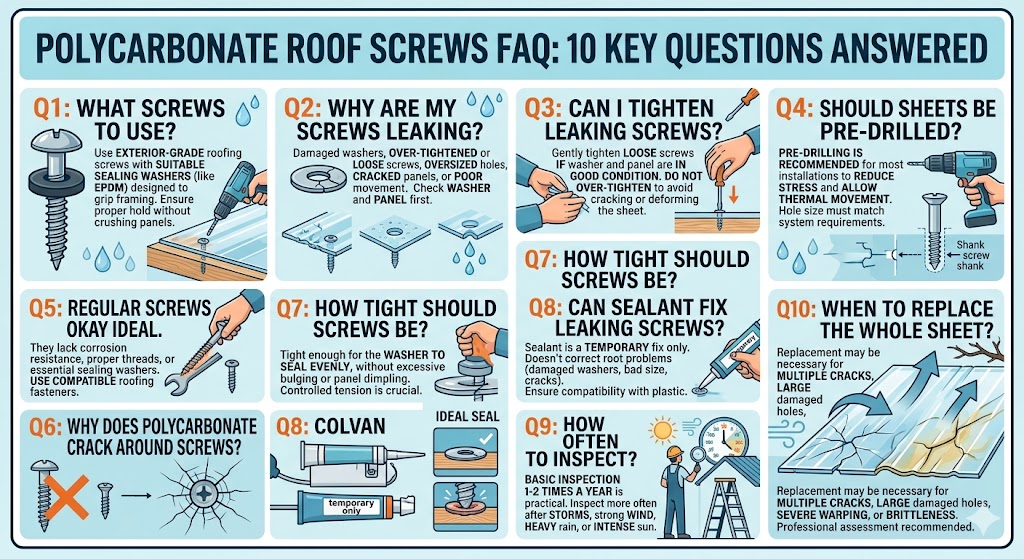
Polycarbonate roof screws FAQ
Q1: What screws should be used for polycarbonate roofing?
Use exterior-grade roofing screws that match the support material and include suitable sealing washers. The screw must hold firmly without crushing the polycarbonate sheet.
Q2: Why are my polycarbonate roof screws leaking?
Common reasons include damaged washers, over-tightened screws, loose screws, oversized holes, cracked panels, or poor support movement. The washer and panel around the screw should be inspected first.
Q3: Can I tighten leaking polycarbonate roof screws?
You can gently tighten a loose screw if the washer and panel are still in good condition. Do not over-tighten, because excessive pressure can crack or deform the sheet.
Q4: Should polycarbonate sheets be pre-drilled before screwing?
In most installations, pre-drilling is recommended because it helps reduce stress and allows the sheet to move with temperature changes. Hole size should match the roofing system requirements.
Q5: Can I use regular screws on polycarbonate roofing?
Regular screws are usually not ideal because they may lack corrosion resistance, proper thread design, or sealing washers. Roofing screws designed for exterior use are a safer choice.
Q6: Why does polycarbonate crack around screws?
Cracking often happens when screws are over-tightened, holes are too small, the panel cannot expand, or the roof structure moves. Once cracking appears, avoid tightening the screw harder.
Q7: How tight should polycarbonate roof screws be?
They should be snug enough for the washer to seal evenly, but not so tight that the washer bulges heavily or the sheet becomes dimpled. Controlled tightening is essential.
Q8: Can sealant fix leaking roof screws?
Sealant may provide a temporary improvement, but it does not fix damaged washers, loose screws, cracked panels, or incorrect hole size. Use sealant only when it is compatible with polycarbonate and appropriate for the repair.
Q9: How often should polycarbonate roof screws be inspected?
A basic inspection once or twice a year is practical for many roofs. Check more often after storms, strong wind, heavy rain, or long periods of intense sun.
Q10: When should I replace the whole polycarbonate sheet instead of the screws?
Replacement may be needed when the sheet has multiple cracks, large damaged holes, severe warping, brittleness, or repeated leaks across many fixing points. A professional inspection can confirm whether repair is still practical.